


Did you know that Git, the name of the popular version control system, is an English word rather than an acronym? Linus Torvalds, one of its original developers, chose the name as a self-deprecating joke. The term git, roughly meaning “idiot” or “fool,” is used rarely outside of British English, which I suspect is the reason why many might assume that it’s a technical term.
I commonly see it spelled “GIT” by Git users and non-technical people alike. Rather than just a personal pet peeve, I also see it as a symptom. Ironically, in my observation the wrong spelling also often correlates with a rather low level of mastery and a number of bad habits despite regular use over many years. Maybe they have rarely (if ever) looked into the official documentation or the manual bundled with Git. Maybe they have never dived deep into acquiring a good understanding of how Git—one of the most ubiquitously used software development tools—works. Maybe they have learned Git, like many developers, from others who weren’t too familiar with Git themselves. Otherwise one almost has to run into the correctly spelled name quite regularly, even with just the manual.
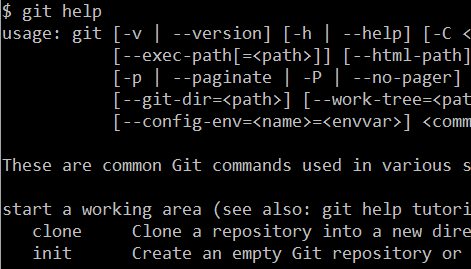
When I learn a new tool whose name is an acronym, I want to know what the acronym means. Even when it doesn’t matter for everyday use, and I might even forget what it stands for, it helps with building an intuition. I don’t assume an acronym by default, even in cases where the name might sometimes be stylized in capital letters. Jira (JIRA) seems to be similarly predisposed for that mistake.
 Raimund Krämer